
Visit Quilpie Shire
Visit Quilpie Shire
Quilpie Shire needed a more accessible, user-friendly website to promote tourism and help visitors plan their stay. I led the redesign with a focus on usability, clarity, and accessibility, resulting in a streamlined, mobile-first experience for both visitors and local operators.
Client: Quilpie Shire Council
Timeline: 6 weeks
Role: Design & Development
Team: 1 PM & Myself
Tools: Figma, Procreate, WordPress, WAVE, Lighthouse
Problem
The existing website lacked accessibility and was difficult to navigate, limiting its ability to showcase the region effectively. Older travellers and mobile users in particular struggled to find clear, reliable information about accommodation, attractions, and regional highlights.
Goal
Redesign the website to streamline navigation and improve accessibility (WCAG compliance).
Increase engagement by making it easier for visitors to discover, plan, and book their trip.
Deliver a production-ready website that works seamlessly across devices and browsers.
Discovery & Research
Audience
Adults 35–49 with school-aged children
Adults 50+ couples
Travelling by car or tour group
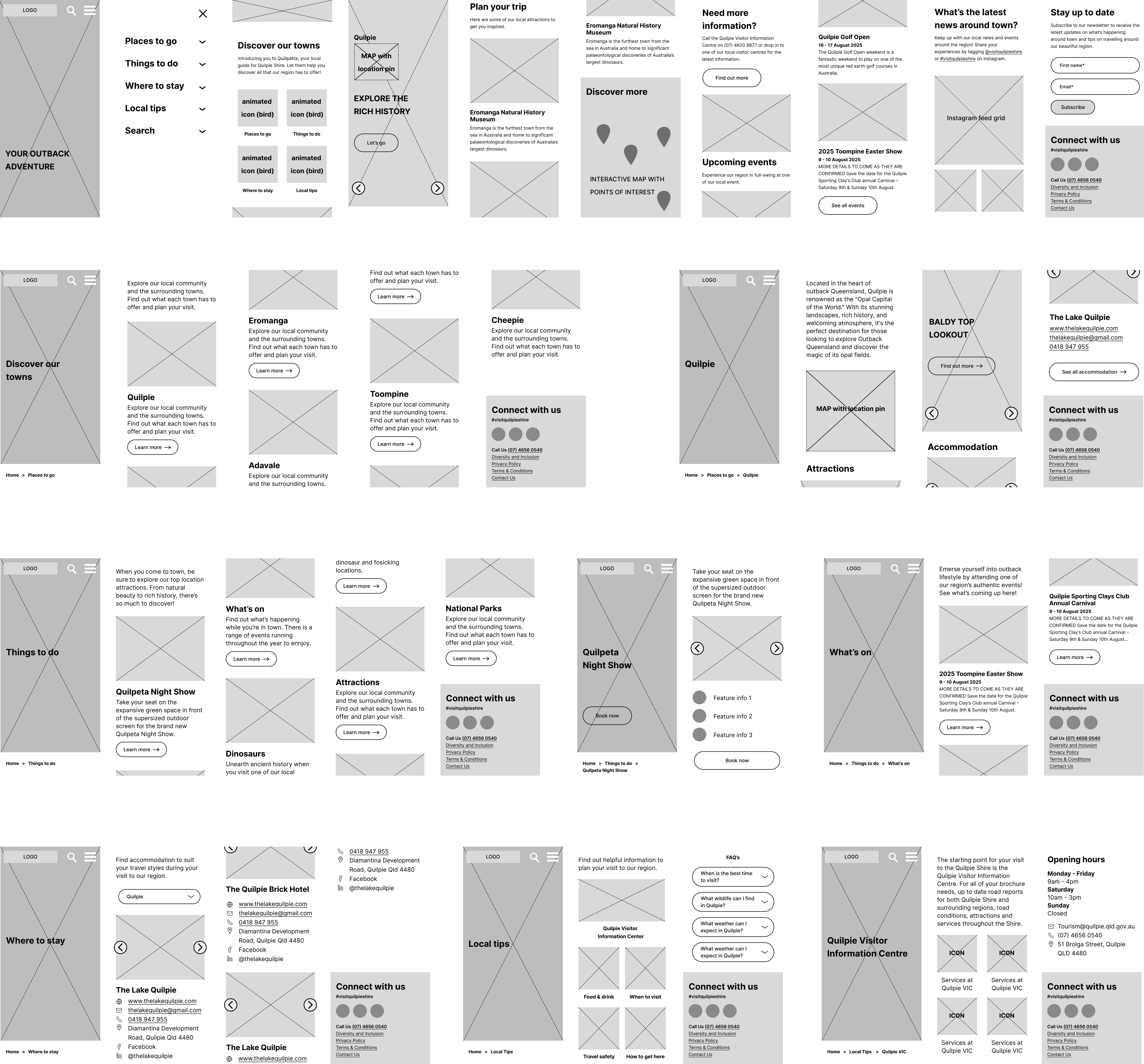
Wireframing & UI Design
Understand what’s in the area
Get inspired to visit
Plan accommodation and activities easily
Pain Points Identified
Confusing navigation
Sparse visual guidance
Lack of filtering per town
Inspiration
Visit Finland – intro regions with maps
Discover Tasmania – icon nav, interactive features
Visit Norway – regional highlights + map overview
Also explored how other remote tourism sites introduce lesser-known destinations, using clear structure and visual guidance to support users with limited local knowledge.
UI/UX Process
Research
Framing
Information Architecture
Ideation
User Testing
Designing
Usability & Accessibility Testing
Solution

Visual improvements
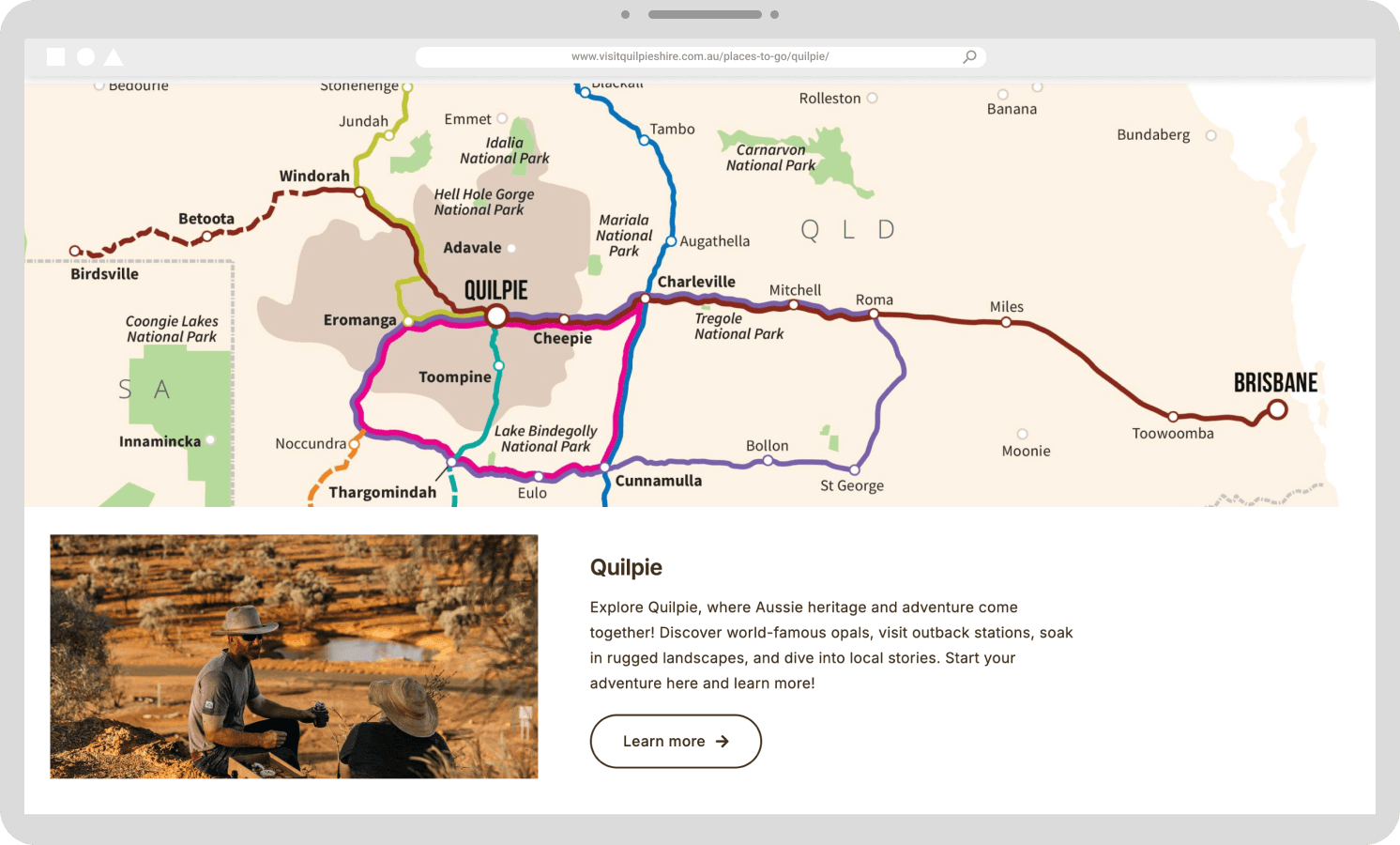
Oversized, striking visuals throughout the site sit cohesively within an earthy-toned UI, carefully utilising white space and clean typography
Responsive layout for all device types
Interaction Design
Focused on mobile first design and functionality to enhance their experience and ensure they can navigate smoothly on smaller devices
Interactive maps to help users visualise locations of attractions and plan out their trip more effectively
Filtering per town function for accommodation to help users find most relevant options instead of viewing all towns at once
Integration of Instagram feed and email sign up form to encourage opt ins for further communication once users have left the site
Impact
The new site has launched successfully and is already helping visitors — especially those less familiar with remote destinations — plan their trips with more confidence. Early engagement results include live email sign-ups through the new newsletter integration. Feedback has been enthusiastic from both visitors and local operators, who described the site as easy to use, inviting, and simple to navigate.
Problem
The existing website lacked accessibility and was difficult to navigate, limiting its ability to showcase the region effectively. Older travellers and mobile users in particular struggled to find clear, reliable information about accommodation, attractions, and regional highlights.
Goal
Redesign the website to streamline navigation and improve accessibility (WCAG compliance).
Increase engagement by making it easier for visitors to discover, plan, and book their trip.
Deliver a production-ready website that works seamlessly across devices and browsers.
Discovery & Research
Audience
Adults 35–49 with school-aged children
Adults 50+ couples
Travelling by car or tour group
User Needs
Understand what’s in the area
Get inspired to visit
Plan accommodation and activities easily
Pain Points Identified
Confusing navigation
Sparse visual guidance
Lack of filtering per town
Inspiration
Visit Finland – intro regions with maps
Discover Tasmania – icon nav, interactive features
Visit Norway – regional highlights + map overview
Also explored how other remote tourism sites introduce lesser-known destinations, using clear structure and visual guidance to support users with limited local knowledge.
UI/UX Process
Research
Framing
Information Architecture
Ideation
User Testing
Designing
Usability & Accessibility Testing
Solution
Visual improvements
Oversized, striking visuals throughout the site sit cohesively within an earthy-toned UI, carefully utilising white space and clean typography
Responsive layout for all device types
Interaction Design
Focused on mobile first design and functionality to enhance their experience and ensure they can navigate smoothly on smaller devices
Interactive maps to help users visualise locations of attractions and plan out their trip more effectively
Filtering per town function for accommodation to help users find most relevant options instead of viewing all towns at once
Integration of Instagram feed and email sign up form to encourage opt ins for further communication once users have left the site
Impact
The new site has launched successfully and is already helping visitors — especially those less familiar with remote destinations — plan their trips with more confidence. Early engagement results include live email sign-ups through the new newsletter integration. Feedback has been enthusiastic from both visitors and local operators, who described the site as easy to use, inviting, and simple to navigate.
“I think it looks amazing. Easy to read and understand. I find some websites hard to get around but this one is very simple straight to the point of information you need. Quilpie and surrounds never looked so inviting! Lots to do, eat and see. Awesome works. Proud to be part of it!”
Fiona Ferguson - Co Owner of Toogunna Plains Farmstay (Quilpie)
Reflection
This project gave me a real appreciation for designing with a broad, public audience in mind. Working with a rural council and regional tourism operators, I wanted the site to feel not just visually engaging but genuinely easy to use for visitors of all ages and levels of digital confidence.
It strengthened my ability to keep accessibility, usability, and clear information hierarchy front of mind, while also learning how to translate stakeholder goals into simple, user-friendly flows that met real visitor needs.
If I had the chance to do it again, I’d love to involve real users earlier in the process to validate assumptions sooner. That’s something I’ve carried into my more recent projects — making time to test and iterate instead of just polishing at the end.
Discovery & Research
Audience
Adults 35–49 with school-aged children
Adults 50+ couples
Travelling by car or tour group
User Needs
Understand what’s in the area
Get inspired to visit
Plan accommodation and activities easily
Pain Points Identified
Confusing navigation
Sparse visual guidance
Lack of filtering per town
Inspiration
Visit Finland – intro regions with maps
Discover Tasmania – icon nav, interactive features
Visit Norway – regional highlights + map overview
Also explored how other remote tourism sites introduce lesser-known destinations, using clear structure and visual guidance to support users with limited local knowledge.
UI/UX Process
Research
Framing
Information Architecture
Ideation
User Testing
Designing
Usability & Accessibility Testing
Solution
Visual improvements
Oversized, striking visuals throughout the site sit cohesively within an earthy-toned UI, carefully utilising white space and clean typography
Responsive layout for all device types
Interaction Design
Focused on mobile first design and functionality to enhance their experience and ensure they can navigate smoothly on smaller devices
Interactive maps to help users visualise locations of attractions and plan out their trip more effectively
Filtering per town function for accommodation to help users find most relevant options instead of viewing all towns at once
Integration of Instagram feed and email sign up form to encourage opt ins for further communication once users have left the site
Impact
The new site has launched successfully and is already helping visitors — especially those less familiar with remote destinations — plan their trips with more confidence. Early engagement results include live email sign-ups through the new newsletter integration. Feedback has been enthusiastic from both visitors and local operators, who described the site as easy to use, inviting, and simple to navigate.
“I think it looks amazing. Easy to read and understand. I find some websites hard to get around but this one is very simple straight to the point of information you need. Quilpie and surrounds never looked so inviting! Lots to do, eat and see. Awesome works. Proud to be part of it!”
Fiona Ferguson - Co Owner of Toogunna Plains Farmstay (Quilpie)
Reflection
This project gave me a real appreciation for designing with a broad, public audience in mind. Working with a rural council and regional tourism operators, I wanted the site to feel not just visually engaging but genuinely easy to use for visitors of all ages and levels of digital confidence.
It strengthened my ability to keep accessibility, usability, and clear information hierarchy front of mind, while also learning how to translate stakeholder goals into simple, user-friendly flows that met real visitor needs.
If I had the chance to do it again, I’d love to involve real users earlier in the process to validate assumptions sooner. That’s something I’ve carried into my more recent projects — making time to test and iterate instead of just polishing at the end.
Problem
The existing website lacked accessibility and was difficult to navigate, limiting its ability to showcase the region effectively. Older travellers and mobile users in particular struggled to find clear, reliable information about accommodation, attractions, and regional highlights.
Goal
Redesign the website to streamline navigation and improve accessibility (WCAG compliance).
Increase engagement by making it easier for visitors to discover, plan, and book their trip.
Deliver a production-ready website that works seamlessly across devices and browsers.
Problem
The existing website lacked accessibility and was difficult to navigate, limiting its ability to showcase the region effectively. Older travellers and mobile users in particular struggled to find clear, reliable information about accommodation, attractions, and regional highlights.
Goal
Redesign the website to streamline navigation and improve accessibility (WCAG compliance).
Increase engagement by making it easier for visitors to discover, plan, and book their trip.
Deliver a production-ready website that works seamlessly across devices and browsers.
Discovery & Research
Audience
Adults 35–49 with school-aged children
Adults 50+ couples
Travelling by car or tour group
User Needs
Understand what’s in the area
Get inspired to visit
Plan accommodation and activities easily
Pain Points Identified
Confusing navigation
Sparse visual guidance
Lack of filtering per town
Inspiration
Visit Finland – intro regions with maps
Discover Tasmania – icon nav, interactive features
Visit Norway – regional highlights + map overview
Also explored how other remote tourism sites introduce lesser-known destinations, using clear structure and visual guidance to support users with limited local knowledge.
UI/UX Process
Research
Framing
Information Architecture
Ideation
User Testing
Designing
Usability & Accessibility Testing
Solution
Visual improvements
Oversized, striking visuals throughout the site sit cohesively within an earthy-toned UI, carefully utilising white space and clean typography
Responsive layout for all device types
Interaction Design
Focused on mobile first design and functionality to enhance their experience and ensure they can navigate smoothly on smaller devices
Interactive maps to help users visualise locations of attractions and plan out their trip more effectively
Filtering per town function for accommodation to help users find most relevant options instead of viewing all towns at once
Integration of Instagram feed and email sign up form to encourage opt ins for further communication once users have left the site
Impact
The new site has launched successfully and is already helping visitors — especially those less familiar with remote destinations — plan their trips with more confidence. Early engagement results include live email sign-ups through the new newsletter integration. Feedback has been enthusiastic from both visitors and local operators, who described the site as easy to use, inviting, and simple to navigate.
“I think it looks amazing. Easy to read and understand. I find some websites hard to get around but this one is very simple straight to the point of information you need. Quilpie and surrounds never looked so inviting! Lots to do, eat and see. Awesome works. Proud to be part of it!”
Fiona Ferguson - Co Owner of Toogunna Plains Farmstay (Quilpie)
Reflection
This project gave me a real appreciation for designing with a broad, public audience in mind. Working with a rural council and regional tourism operators, I wanted the site to feel not just visually engaging but genuinely easy to use for visitors of all ages and levels of digital confidence.
It strengthened my ability to keep accessibility, usability, and clear information hierarchy front of mind, while also learning how to translate stakeholder goals into simple, user-friendly flows that met real visitor needs.
If I had the chance to do it again, I’d love to involve real users earlier in the process to validate assumptions sooner. That’s something I’ve carried into my more recent projects — making time to test and iterate instead of just polishing at the end.